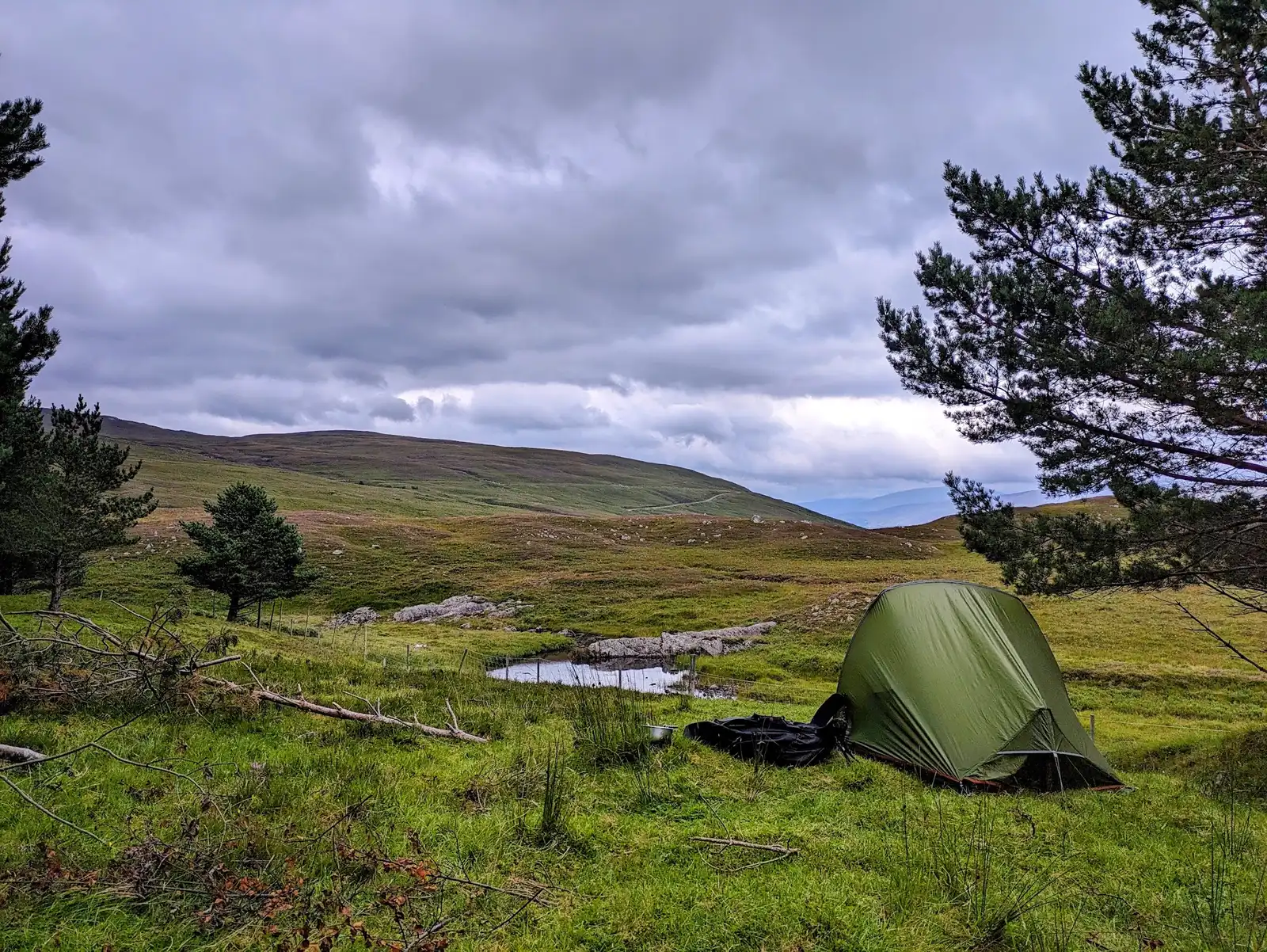
Someone posted "new LighterPack killer" on r/Ultralight a while back — turned out to be LighterPack's own creator, shipping dark mode and a mobile fix after thirteen years. Even he was killing the old version of LighterPack. It's still one simple, free, shareable gear list, just tidier now. If that's all you want, keep using it. OutPack is the evolution of it, and of PackWizard and my old spreadsheets besides, built around the trip rather than just the list.
Where it started
My gear lists began as a spreadsheet, then moved into LighterPack. Both were fine, until I had five of them: winter, summer, a couple of trip-specific ones, each its own copy of the same gear. Swap a tent and you're fixing the weight in five places. What I actually wanted was one inventory I could pick from for whatever trip was next.
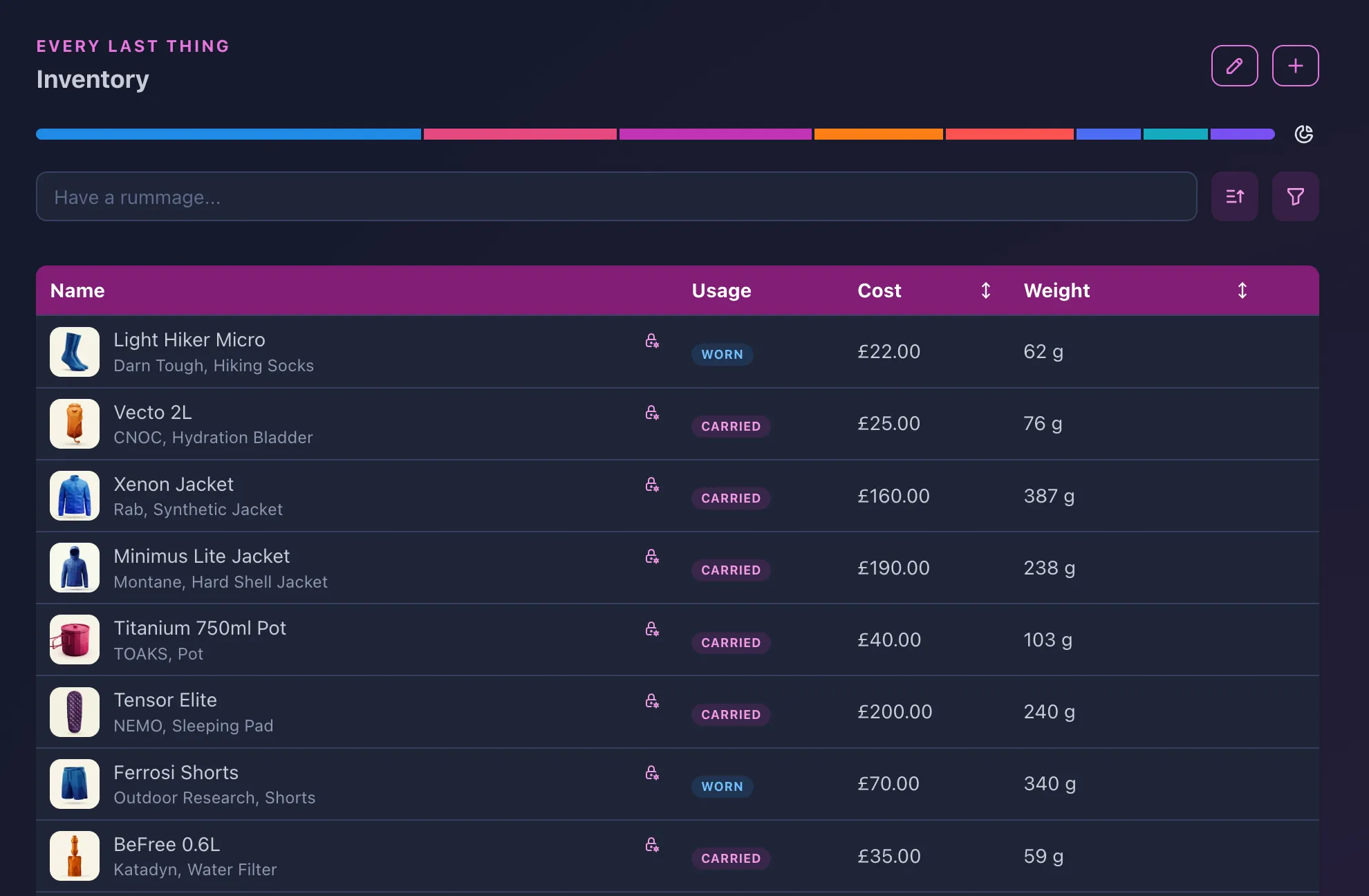
One inventory, weighed once. Every kit, pack and trip draws from here.
Kits, packs, and the trips they're for
That inventory grew into kits and packs, because that's genuinely how I pack: a first aid kit, a cook kit, a few of those plus loose items making up a pack. A pack still gives you the LighterPack numbers (base weight, worn against carried, the category breakdown) because that language is worth keeping.
But a pack on its own is still just a list. The trips are the actual point: the memories, on my own, with mates, or with family, that a spreadsheet never had room for.
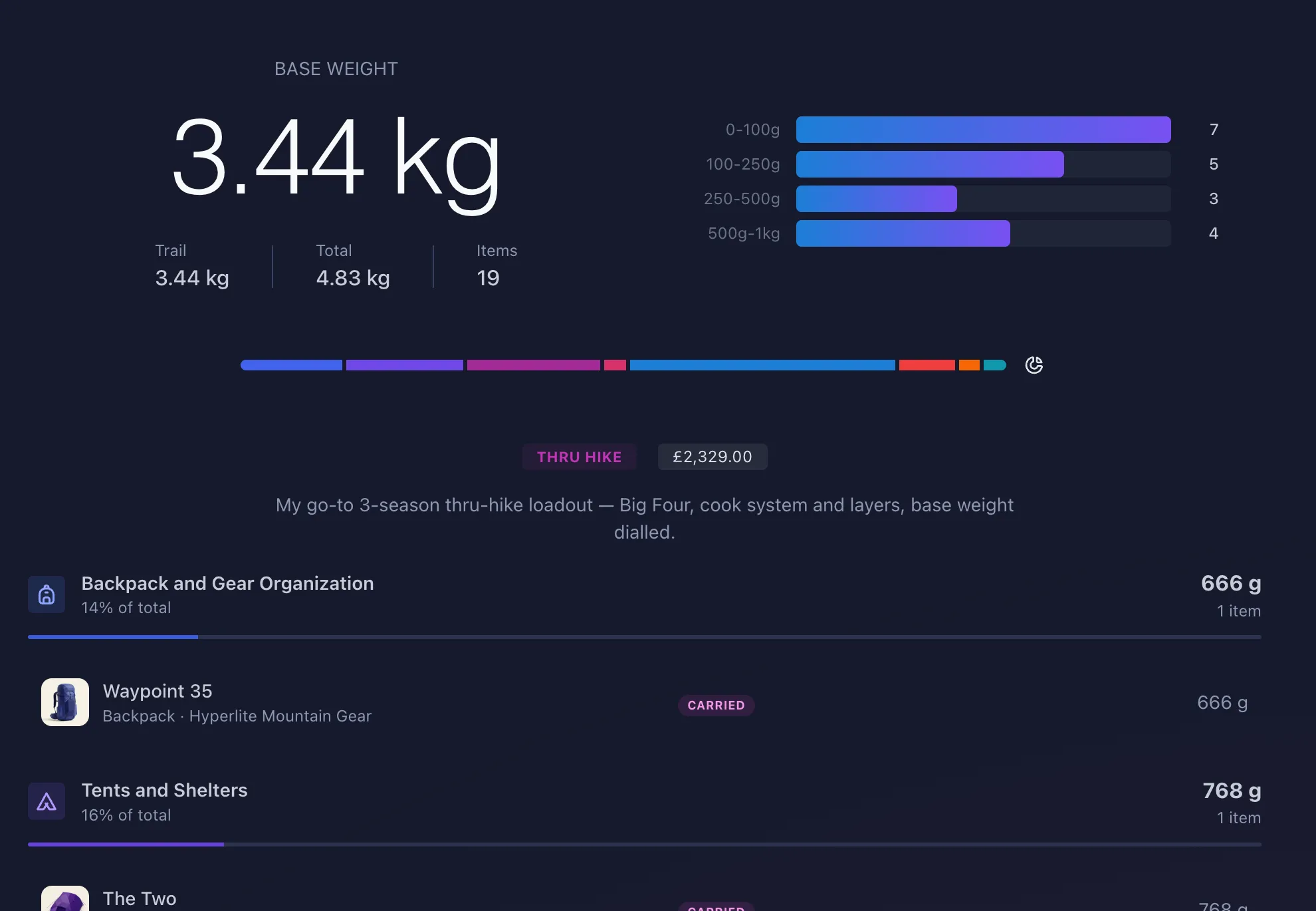
The familiar numbers: base weight, worn and carried, and the breakdown by category.
If your gear already lives in LighterPack, you don't need to type it all out again. Export the CSV and upload it. OutPack reads the names, weights, categories, prices and worn or consumable flags, and lets you check everything before it's saved.
Start free, then import your CSVYou can also try it without importing anything. Paste a LighterPack share link into the compare page and OutPack will read the list, sort it into categories, and put it next to another list side by side — base, worn, consumable and total, with the difference on every line.
Compare a LighterPack listThe bit that goes with you
Mobile came next, and it had to be a proper native app rather than a website in a wrapper, so the itinerary still updates with no signal somewhere remote. Then pantry and food, so pack weight and nutrition live in the same place: barcode scanning, AI food scanning, and more of that on the way.
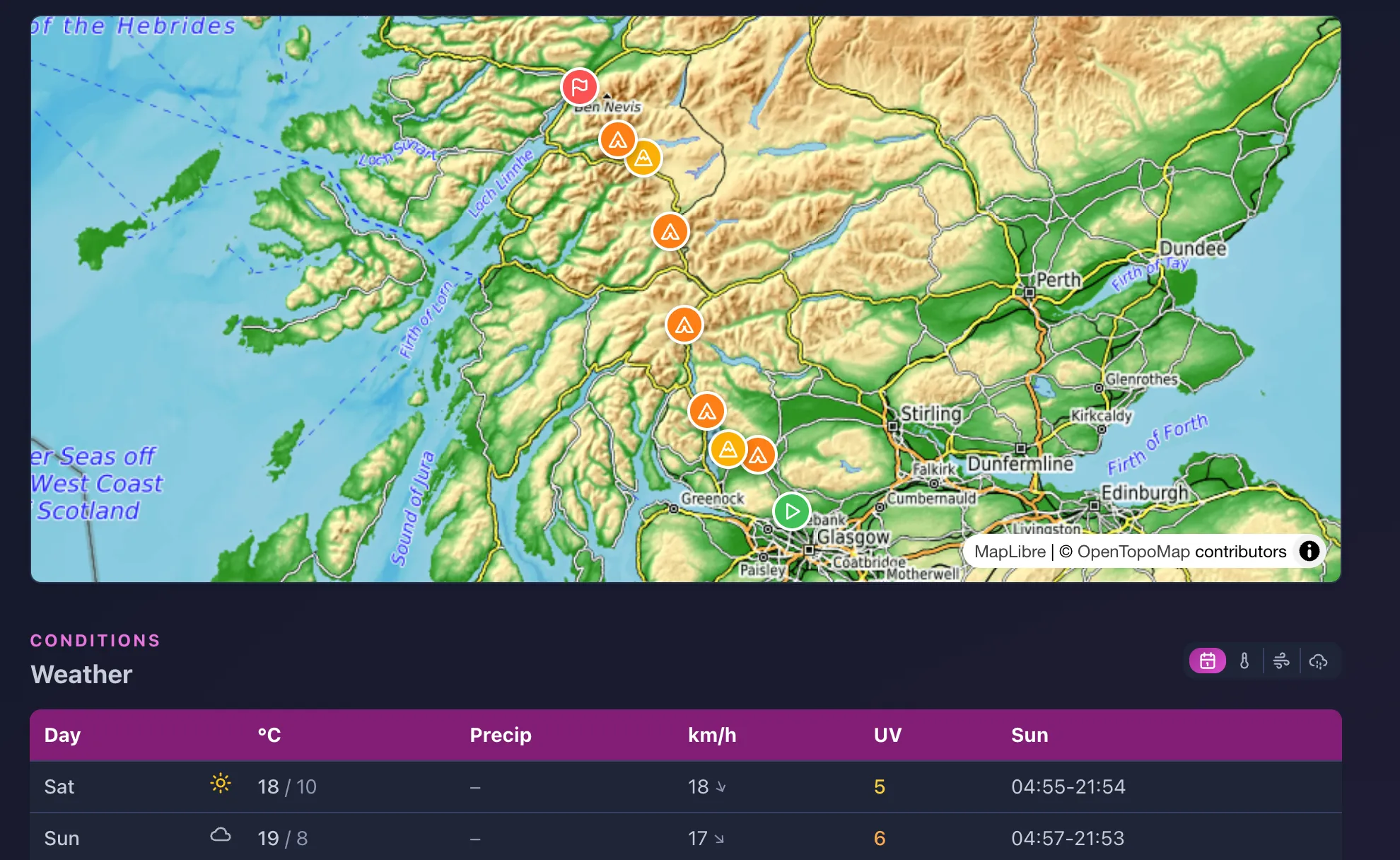
A trip knows things a list cannot: the camps on the map and the week's forecast.
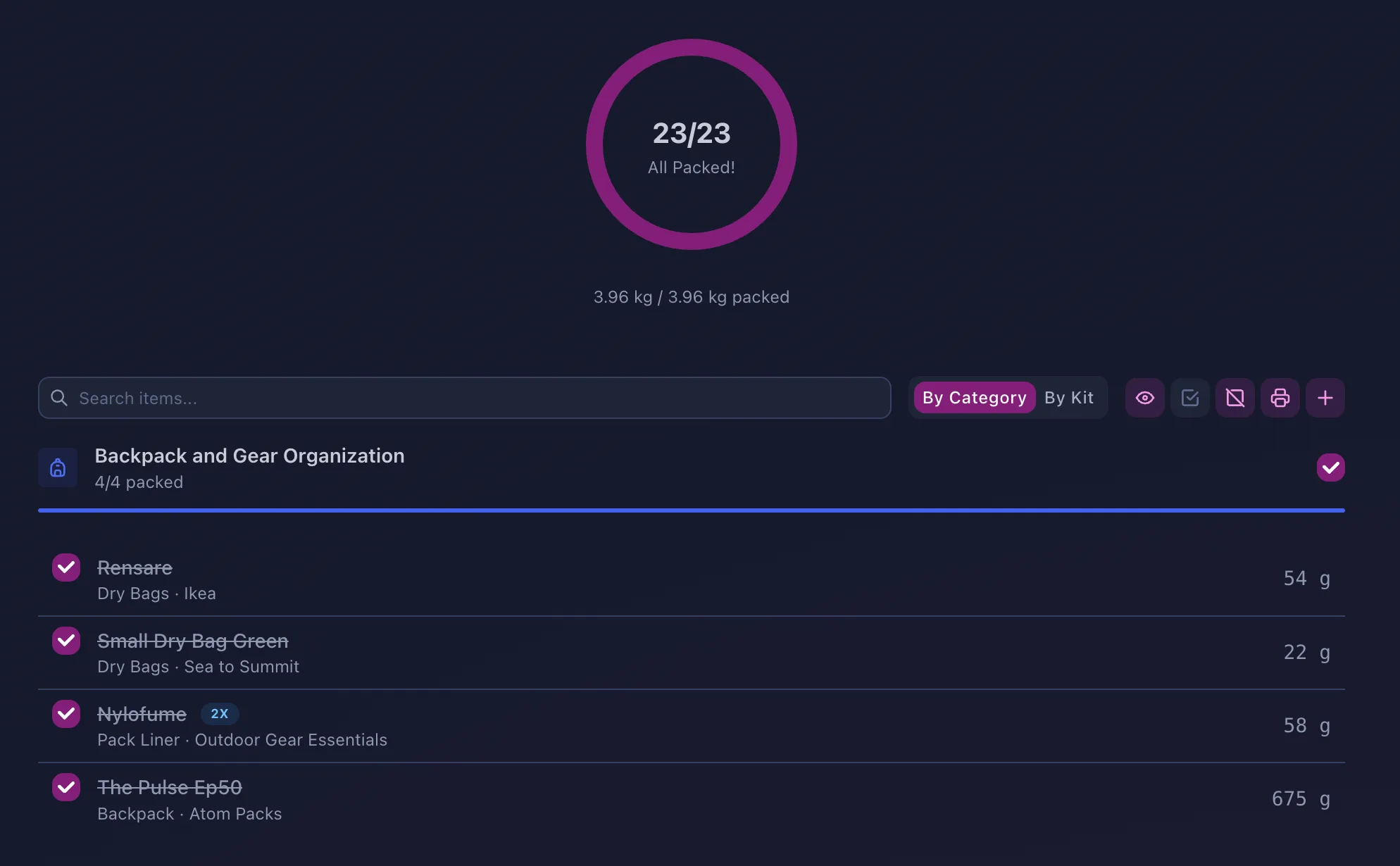
All packed, the night before a real trip of my own. Generated from the trip, not written out again.
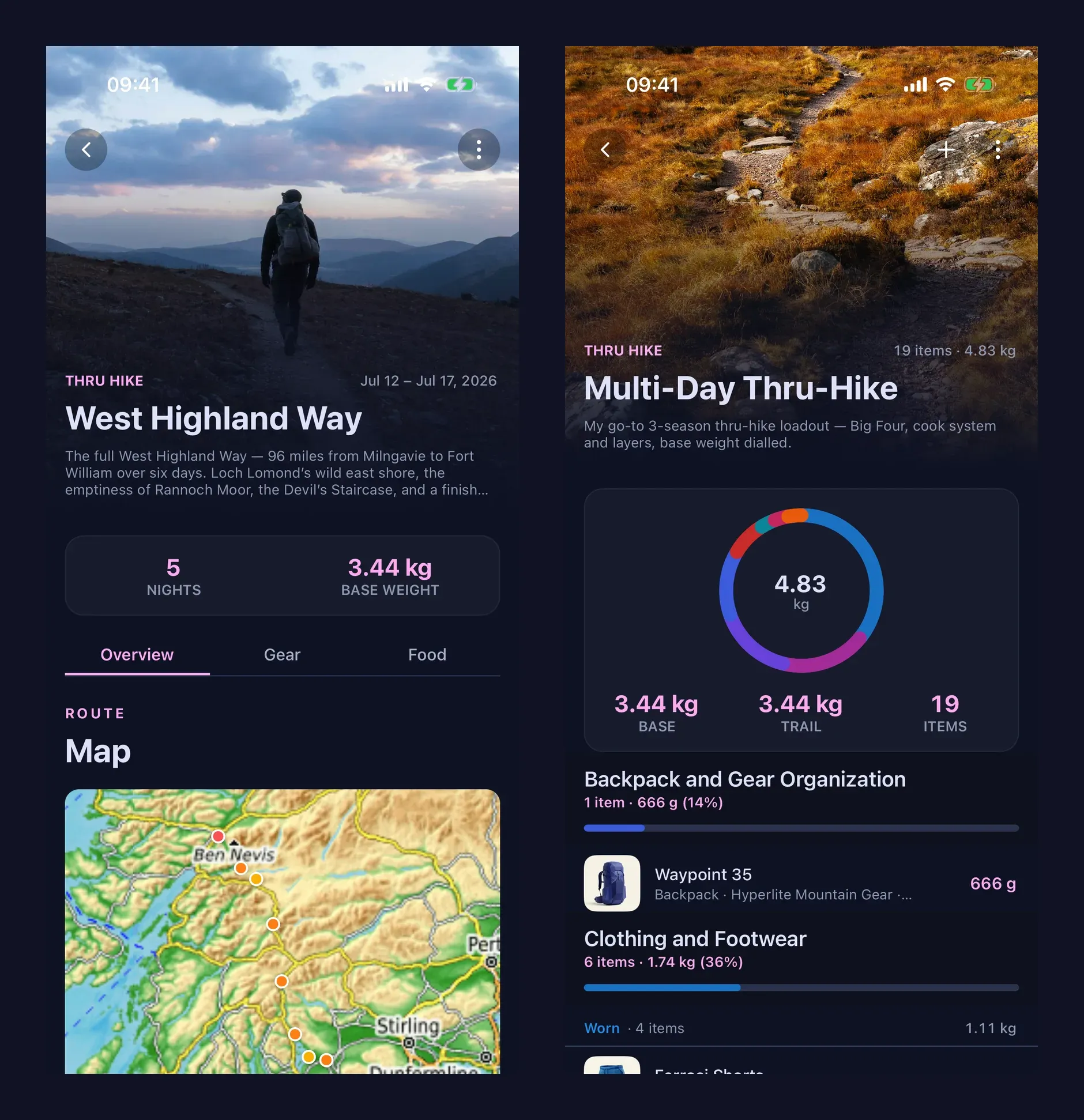
The same trip and the same pack, on the phone that actually goes up the hill.
Side by side
I can still picture my first spreadsheet, and my first play with LighterPack. OutPack's grown past both of them now, not by replacing LighterPack, but by building the bit it was never trying to be.
"LighterPack still does the simple list better than anything. OutPack is the evolution, built for the trip and not just the gear."

Whichever tool you count your grams in, I hope the pack sits light and the forecast holds.
— Andrew